http://www.marketoracle.co.uk/Article8768.html
This was an interesting article to read. The analysis is very simple. It looks at which countries produce the most food, and which countries are experiencing drought. Basically, all of the countries that produce large amounts of food are experiencing moderate to severe drought. Just based upon lack of rainfall, it appears that globally, we are going to have at least a 20 to 40% decrease in food production this year. And, yes, here in the USA too.
I have mentioned before that right now, we have the lowest food reserves in decades. Now is a really bad time to not be able to grow enough food, since we don't have enough stored to make up the difference.
We should all be doing the Victory Garden thing this year. Not only for our own food security, but every little bit we don't have to buy is some left over for someone else. But if we don't have enough water for farmers, will we have enough for everyone to have a vegetable garden?
It is high time to look at the ways we use water, and make decisions about what is really important. Is it more important to have a green lawn of grass in Las Vegas, Salt Lake City, or any of the other naturally dry areas, or is it more important to use that water to grow food? Is it really a good idea to take perfectly clean drinking water to flush our waste away? What can we do to conserve water, individually, and at a societal level, for the most important things?
Showing posts with label global issues. Show all posts
Showing posts with label global issues. Show all posts
Monday, February 16, 2009

Thursday, February 28, 2008
stocking up
I am reading a lot these days about food. Specifically, about whether there is enough to go around. The general consensus seems to be that there is not, despite the apparent abundance in our grocery stores. Here are a few examples:
- The United Nations is reporting that they are not able to continue to feed the numbers of hungry people they have been feeding. The article states, "With voluntary contributions from the world's wealthy nations, the WFP [World Food Program] feeds 73 million people in 78 countries, less than a 10th of the total number of the world's undernourished. But with annual food price increases around the world of up to 40% and dramatic hikes in fuel costs, that budget is no longer enough even to maintain current food deliveries." http://www.guardian.co.uk/environment/2008/feb/26/food.unitednations
- China is facing renewed fears that its growing demand for grain to feed the world’s largest population may lead to imports from international markets, driving prices higher and spurring further food inflation. http://www.ipsnews.net/news.asp?idnews=41345
- Venezuela is experiencing severe food shortages, and is halting exports of many food items. http://www.news.com.au/story/0,23599,23277253-1702,00.html
- The world’s wheat stockpiles have fallen to their lowest level in 30 years, and stocks in the United States have dropped to levels unseen since 1948. http://www.nytimes.com/2008/02/13/business/13wheat.html?_r=2&ref=business&oref=slogin&oref=slogin
- Smithfield Foods, one of the largest pork processors in the United States, is reducing its U.S. breeding herd by 4% to 5%, or 40,000 to 50,000 sows, because of rising grain costs. That means Smithfield ultimately will produce 800,000 to 1 million fewer market hogs annually, the company said. Smithfield currently raises 18 million market hogs a year. This article was on CNN Money, but is no longer available online.
- In the wheat price surge this week, the leading wheat contract has risen by more than the entire worth of the contract just months ago. Prices rallied by $5.75 a bushel on Monday, being up by nearly 30% at one point compared with Friday’s close. Eight months ago on June 19, the lead wheat contract settled at over $5.00 a bushel. http://nqr.farmonline.com.au/news_daily.asp?ag_id=48995
All of this is making me distinctly nervous. Food shortages around the world, record wheat prices, and our idiotic president is encouraging more of our corn be turned into biodiesel and ethanol. It is enough to make me really glad I am starting a garden this year. And determined to grow a lot of potatoes. We also did this:
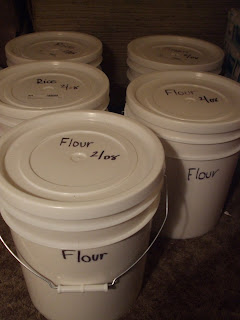
Wednesday, February 13, 2008
southeast water problems

I was listening to Alaska News Nightly on NPR on the way home from work tonight. They had a segment about several communities in Southeast Alaska that normally get their electricity from hydroelectric plants, that have had to use large backup diesel generators to power their communities, some of them for the first time ever. Why? Because there has not been enough rain, which means there is not enough water to run the hydroelectric plants. In many of these communities, this is a situation that has been developing over the last few years, and it is a troubling trend.
Southeast Alaska has a climate very similar other parts of the Pacific Northwest, including lots of rain and mild temperatures year round. If a decrease of rainfall persists, the climate and ecosystems there will change rapidly as things dry out. Southeast has lots of large, beautiful trees that require a LOT of moisture, and it would be very sad to lose them.
If you are curious, you can listen to it here:
Tuesday, February 12, 2008
this makes me mad....
http://www.boston.com/news/globe/editorial_opinion/oped/articles/2007/10/21/the_heat_or_eat_dilemma/?page=1
So, we can justify spending TRILLIONS of dollars getting our soldiers killed in Iraq, but we can't make sure people stay warm this winter???
I know, lots of people think that poor people are poor because of their own laziness, bad choices, whatever. And some of them are. But some of them are poor because they don't speak English well, can't get a good job, are disabled or in poor health, daycare costs so much they might as well not work, etc. And REGARDLESS of why the parents are poor, the kids are helpless.
I don't much agree with just handing out money to people, even though I have to admit I am looking forward to the "rebate" we will all be getting this spring... it will be paying for my kitchen cabinets. But things like heating assistance that go directly to the utility company to help keep the electricity on and the house warm, I am totally in favor of.
And for the government to say there is no money for the HEAT program while the Iraq war is costing so much, and is such a waste of money, is just plain ridiculous.
Monday, February 11, 2008
kiss your grass goodbye...

Sharon posted a great piece about victory gardens on her blog the other day. Give it a read:
There are lots of reasons to bring back victory gardens, including but not limited to:
- Right now, our food travels an average of 1500 miles to get to our table. (Further if you happen to live in Alaska). That's a lot of emissions, and our climate is in trouble.
- Industrial agriculture is in trouble. With the specters of climate change, drought, peak oil, and shortages of fertilizer (likely fairly permanent), the yields of industrial farmers will drop, possibly precipitously.
- Speaking of fertilizer, industrial fertilizers, insecticides, pesticides and such are really not good for people to eat. If you grow your own produce, you control how much crap goes on it.
- Every time I go to the grocery store, I notice that food seems to be getting more and more expensive. Growing your own insulates you from this to some degree.
- I read this morning that the US wheat stocks are at a 60 year low. This will only get worse as more and more farmland is converted to growing corn for biodiesel and ethanol.
- and, of course gardening is great exercise.
Seriously, there are lots of reasons to grow your own food, and encourage your neighbors to do the same. The politicians keep yammering about achieving energy independence, and this is a start.
Tuesday, February 5, 2008
interesting article about Alaska's oil
I found an interesting article the other day. It talks about how much oil we should expect to find in ANWR (Arctic National Wildlife Refuge) and NPR-A (National Petroleum Reserve - Alaska), while avoiding the moral question of whether we should be drilling there. From this article's perspective, at least, while everyone knows there is oil in both places, it isn't likely that there will be another find like Prudhoe. Take a look:
http://www.aspo-usa.com/index.php?option=com_content&task=view&id=311&Itemid=91
It also talks briefly about a factor in Alaskan oil that has bothered me for some time: the minimum operating flow of the pipeline. There has to be a certain amount of oil flowing through it to make it work (I assume to maintain sufficient pressure to move the oil 800 miles). Oil tankers may be a partial solution to this problem, at least in the summer, but it will certainly be much more expensive.
Tuesday, January 15, 2008
it's the economy, stupid
http://www.msnbc.msn.com/id/22664317/
More and more news articles are mentioning the possibility of a recession. Now the experts are saying that there is a 50-50 chance we will begin a recession this year. Each new story about economic data makes the situation look grimmer.
One of the first things that slows down in a recession is construction. It is already happening. Alaska lost 800 construction jobs in the past year:
http://www.labor.state.ak.us/research/trends/jan08empscene.pdf
This is much more immediately concerning to me than the national news. I really don't particularly care if Citibank loses $10 billion. It doesn't affect me. But I care if my husband, who just happens to be a carpenter, loses his job. So far, he is doing ok, because he is lucky enough to work for a company that does insurance work. And this time of year there are lots of frozen pipes to keep him busy. But even his company has not hired anyone new in a while. And there are a couple people leaving soon, and James reports that the company has no immediate plans to replace them. So, while his job is secure for the moment, we are trying to make backup plans. James is looking at other options, such as working on the slope. That would mean he would be gone two weeks at a time, which is hard on everyone. And we are trying to figure out what changes we would need to make to live for a while on one income (most likely mine) if it becomes necessary.
We have lost jobs before. A few years ago, James was laid off right after I found out I was expecting Steven, two weeks before Christmas. And we got by. We even managed to salvage Christmas for our kids. So if it does happen, it is not the end of the world. But it is always better to go into such things prepared.
But right now, he has a job, and it pays well. And I will keep my fingers crossed.
Friday, December 14, 2007
the story of stuff
Here is a very interesting video about the lifecycle of the things we buy. It is also a powerful (I think, anyway) argument for why we should try to buy less. Remember the old saying "use it up, wear it out, make it do, or do without"? Enjoy.
http://www.storyofstuff.com/?gclid=CJ_Z69mkqJACFQJaiAodZFmyqQ
http://www.storyofstuff.com/?gclid=CJ_Z69mkqJACFQJaiAodZFmyqQ
Thursday, November 29, 2007
warm weather
So, the week before Thanksgiving I was in Utah. I could not believe how warm it was. Check this out: 

70 degrees! And almost no snow in the mountains:
And while I was there, I talked to several people, none of whom I want to offend, as they are my family and close friends, about global warming. And none of them believe it is really happening. Even though it was seventy degrees in November.
The news about global warming is getting more and more grim. Check this article out:
http://www.time.com/time/health/article/0,8599,1685199,00.html
People keep saying that there is a lot of debate in the scientific community regarding whether global warming is real, or if it is really caused by human activity. Maybe five years ago, that was true. But a lot of work has been done on the subject in the last two or three years, and it's pretty clear. It's really happening, we caused it, and if we don't do something to fix it, NOW, we are in serious trouble.
Monday, November 12, 2007
Worried
There is a lot going on in the world recently, and much of it has me worried. On NPR on Friday, one expert stated unequivocally that if the world remains on the path it is on, in 30 to 50 years, no one will live in a first world society. (http://marketplace.publicradio.org/display/web/2007/11/09/consumed1_pm_3/) There are many issues confronting us as a society right now. There are so many, in fact, that I do not think we will have the ability, or maybe just the political will, to solve them. I decided to start a list. Bear with me. Or not.
Global warming. I know you all have heard me preach about this before, but I think it is becoming increasingly obvious that it is going to have a much larger effect that most of us expected, and in a much shorter period of time. Global warming has many side effects, including increasing drought in places like Australia and the US Southwest, Midwest and South, rising sea level, which threatens many coastal cities worldwide, decreasing arctic and Antarctic ice cover, migration of species away from the equator, and so on.
Peak oil. Peak oil, for those of you that haven’t heard of it, is the point at which the production of crude oil is at its highest point. The idea is that there is only so much oil in the ground, and when you get about half of it out, the rest becomes harder and slower. More expensive too. There are many websites out there that talk about whether peak oil is coming sooner or later (my guess is sooner), and what the effects will be. The biggest problem is that at some point, whether it is actually at the peak of production or not, is that demand (which is still growing globally) will at some point begin to outstrip supply. This makes oil both scarce (think gas station lines and rationing) and more expensive (anyone notice the price of crude oil lately????) If we have not found acceptable, workable alternatives that can be ramped up in sufficient quantities to replace our thirst for oil, we are going to be in a huge crunch. The concept of peak also applies to natural gas, coal, and other energy sources.
Water. As a side effect of global warming, there is increasing drought in many areas. Also, it causes more of the rain that does fall to be lost to evaporation. Snow packs in many mountain ranges, which supply fresh water to many cities and agricultural areas, are decreasing. Meanwhile, many of the cities that depend on this snowpack are expanding rapidly, such as Las Vegas. The Ogallala aquifer, the main water supply for the plains states, is declining rapidly. It is being used up much faster than it is being recharged, in some places being used 100 times faster than it is being recharged.
Financial problems. As you may have noticed watching the news recently, things are not looking so good for the financial sector. With the mortgage mess, which seems to be expanding in scope, and affecting much of the rest of the credit market, the downturn in real estate generally, stocks faring terribly, inflation running rampant (although the core inflation rate doesn’t count those necessities, food and energy, that are quickly becoming noticeably more expensive), etc. I think we are in for a nasty recession. Apparently, much of the world agrees, if you notice how valuable our dollar is to the rest of the world right now. This would not be an insurmountable problem by itself; we have had money problems before. But it makes it harder to address the things that need to be addressed.
Agriculture. This is related to many of the items above, but important enough to talk about it by itself. Agriculture, at least the way most US corporate farmers practice it, is heavily dependent on two things: water (duh) and oil. With one farm having acres and acres of corn, wheat, etc. to care for, tractors and other mechanized equipment that run on some derivative of oil, are essential. Also, most people don’t realize this, but natural gas is a necessity for the production of fertilizer. Natural gas has also peaked on this continent. Researchers have found that it takes an average of 10 calories worth of petroleum to get one calorie of food to our plate. Then there is the effect of global warming and water shortage, which also deeply affect our ability to produce food. And then there is top soil loss adding into the problem. Our ability to produce enough food to feed us all is becoming seriously compromised. And then we go and send who knows how much corn to the ethanol plants.
Oceans. They are becoming acidic, thanks to the excess carbon they are soaking up. Their dead zones, courtesy of fertilizer and topsoil runoff, causing algae blooms that deplete the oxygen from the water, are making more and more of our oceans uninhabitable to the species that normally live there. Oil spills, such as what happened with the Exxon Valdez in Prince William Sound, and more recently as the San Francisco Bay spill over the weekend, and the spill in Russia last week, although thankfully relatively rare, are damaging to the oceanic ecosystem when they occur. Also, studies are showing that we are overfishing, to the point of depletion, many of our fisheries. By the middle of the century, scientists report that the current global trend projects the collapse of all species of wild seafood that are currently fished by the year 2050 (collapse is defined as 90 percent depletion). Even Alaska’s wild salmon fishery, which is closely regulated, and receives awards for sustainability, cannot continue if the other species are fished out, as the ecosystem becomes so damaged as to be unable to sustain them.
Other natural resources. Many minerals, metals, and other natural resources are becoming increasingly difficult to mine, with progressively smaller concentrations of the needed substances in the ore. Phosphate, necessary for fertilizer, uranium, copper, and many more are becoming increasingly scarce and difficult to mine. If we are to make the shift away from fossil fuels, it will be increasingly difficult, for example, to build solar panels without the silicone and other minerals they require. This simply compounds the problem.
In a nutshell, we are simply using too much of everything. I think I could make a much longer list, but that is enough to give me a headache. We have completely outstripped the ability of our planet to sustain us. Unless we make immediate drastic changes, our kids are looking at a much less hospitable world than the one we grew up in. And you know, I like my kids. And I have a feeling I will like my grandkids. I don’t want them to suffer because of our choices. But that is where we are headed. So I am worried.
Tuesday, October 23, 2007
wild wild west
http://www.nytimes.com/2007/10/21/magazine/21water-t.html
This is an incredibly scary article for anyone living in the West, especially in the states that get their water from the Colorado River Basin, including Wyoming, Utah, Nevada, Arizona, New Mexico, Colorado, and California. Looks like there soon won't be enough to go around.
This is an incredibly scary article for anyone living in the West, especially in the states that get their water from the Colorado River Basin, including Wyoming, Utah, Nevada, Arizona, New Mexico, Colorado, and California. Looks like there soon won't be enough to go around.
Wednesday, October 17, 2007
arctic warming
http://www.msnbc.msn.com/id/21347288/
I know, I know, I have talked about this before. But it continues to concern me. The last time I talked about this, it was only being mentioned in a website for a university. Now the same information is being talked about on msnbc.com. The sea ice loss this year is catastrophic. But we are also losing tundra and permafrost. The arctic is changing at an increasingly rapid pace.
Further, studies now are showing that it may be too late to prevent a 2 degree rise in global temperatures. 2 degrees is the threshold experts are saying is dangerous to cross, due to feedback loops, and it may be that the only way to stop it is to completely eliminate all industrial emissions.
http://environment.newscientist.com/article.ns?id=dn12775&feedId=online-news_rss20
Maybe in a few years I will try growing peaches here in Alaska.
Thursday, October 11, 2007
not looking good down under
http://www.planetark.org/dailynewsstory.cfm/newsid/44719/story.htm
I have heard for a while about the drought in Australia, and that it is affecting the wheat harvest. I didn't realize, however, that Australian farmers have already lost 40% of their harvest. That is really, really, bad. Wheat stores worldwide are already at a low level not seen in at least 26 years, and Australia is not the only part of the world facing drought and crop loss. And as global warming intensifies, it will only get worse.
I have heard for a while about the drought in Australia, and that it is affecting the wheat harvest. I didn't realize, however, that Australian farmers have already lost 40% of their harvest. That is really, really, bad. Wheat stores worldwide are already at a low level not seen in at least 26 years, and Australia is not the only part of the world facing drought and crop loss. And as global warming intensifies, it will only get worse.
Thursday, September 27, 2007
Agrium
http://www.adn.com/news/alaska/kenai/story/9331726p-9246814c.html
A fertilizer factory here in Alaska, which has provided jobs for up to 300 people, has shut down. You can read about it in the link above, and I heard about it on NPR this morning as I was driving to work. It's not shutting down because it is losing money, not profitable, as is the case for most businesses that don't succeed. It is shutting down because fertilizer is made from natural gas, and there isn't enough. Not enough natural gas. Natural gas is what heats 52% of US homes, is what generates about 20% of our current electricity, and accounts for 95% of all new power plants in the planning/building stages. And there is not enough.
Two winters ago, it shut down for a month due to a shortage of natural gas to make the fertilizer. Last year, it shut down for the entire winter, and reopened in the summer when there was less demand elsewhere for natural gas for heat. This year, it shut its doors for good.
Is this worrisome to anyone else but me? I guess it all boils down to the feeling I have that if there isn't enough natural gas, and there isn't enough oil, and there aren't enough solar, wind, tide, hydroelectric, or other means of power generation to cover, then we are heading for a pretty big mess.
Tuesday, September 18, 2007
Northwest Passage????
Check out this National Geographic article:
http://news.nationalgeographic.com/news/2007/09/070917-northwest-passage.html
OK, so this seems pretty crazy to me. The northwest passage is open? Arctic sea ice loss this year has been nothing short of catastrophic:
"The NH [Northern Hemisphere] sea ice area is currently at its historic minimum (2.92 million sq. km) representing a 27% drop in sea ice coverage compared to the previous (2005) record NH ice minimum." according to the polar research group's website that I linked to in my blog last month. At that time, sea ice was 3.22 million square kilometers, so it has lost another .3 million in three weeks.
And what does National Geographic have to say about it?
"Commercial shipping may be a while off yet. The passage is seasonal, is likely to be unstable enough to endanger commercial vessels, and still lacks supporting ports along the way. "
Unbelievable. I don't even know what to say.
Thursday, August 30, 2007
like, gag me with a spoon
So, yesterday was the second anniversary of Hurricane Katrina. According to the news, George W. visited New Orleans to commemorate the date. According to msnbc.com, he said much progress has been made, and "we're still paying attention."
http://www.msnbc.msn.com/id/20490384/
Now, I am all for people taking care of themselves, and preparing for foreseeable events. New Orleans is on the Gulf Coast, and hurricanes are pretty foreseeable. Maybe lots of people that didn't have insurance should have. Maybe lots of people that lived below sea level shouldn't have. But I would venture a guess that flood insurance in New Orleans wasn't cheap, even before Katrina. And I would also guess that some of those places below sea level were the places where people with fewer resources could afford to live. And if you are having trouble making sure you have food on your plate, and dealing with what you need here and now, insurance for something that may happen someday probably isn't highest on your list of priorities.
And let's face it, hurricanes happen pretty often on the Gulf Coast, but not biggies like Katrina. And the levies failing probably weren't in most people's plans either. And Katrina was a big enough storm, and caused enough damage that 1600 people died. According to this chart,
http://www.aoml.noaa.gov/hrd/Landsea/deadly/Table2.htm
Katrina was approximately the third deadliest hurricane to hit the US, ever. And prior to Katrina, there had only been 3 category 5 storms to hit our coasts. So, I think it is fair to say, that while people living on the Gulf Coast expected hurricanes, they did not expect, and were not prepared for, Katrina.
From what I have been able to glean from the news, New Orleans has had some fixing done. The levies have been patched, although the Corps of Engineers recommends replacing them. The ports are back in operation, because we have to be able to receive all the cheap crap we get from China, and all the cheap automobiles we get from Japan, and all the oil we get from the middle east. The touristy parts of town have been put back in operation. My mother was recently in New Orleans, and thoroughly enjoyed it, so the touristy part must be doing well. But what about all the flooded neighborhoods? What about all the people still living in FEMA trailers that are off-gassing toxic fumes? I really don't think the government, or anyone else, is still paying attention.
I think, for the most part, that Americans have pretty short attention spans. For as long as the news is new (duh, that's why its called news, not olds), we pay attention, we talk about it, we feel horrified. Then we shrug our shoulders, say "Oh, sucks to be them" and move on to the next bit of news.
So, basically, George W. lied. And its news. Well, at least it was yesterday. After all, as far as George W. lying, been there, done that.
Thursday, August 23, 2007
the arctic ice cap is in trouble
http://arctic.atmos.uiuc.edu/cryosphere/
This is very disturbing. According to this article, which was updated just yesterday, until this summer, the smallest area of summer sea ice in the arctic ever recorded was 4.01 million square kilometers (I am not going to do the math to convert it into square miles. You can do that if you would like). On August 9, it was 3.98 million. Yesterday, it was 3.22 million. So in two weeks, the ice cap shrank by 760,000 square kilometers. After it was already smaller than it has ever been. And there is still several weeks of melting to come.
But what amazes me is what the media is saying about it. They are talking about the Russians planting a flag up there. And the Canadians talking about setting up a military base up there. Why? So they can get at the oil that had been previously unrecoverable. OK, now I don't know what anyone else thinks, but this seems incredibly circular and ludicrous. If I understand it correctly, it goes like this.
1. Us burning fossil fuels is causing global warming.
2. Global warming is causing the arctic ice cap to melt much more than it ever has since we started keeping records.
3. Now that the ice cap is melting we can drill for .... fossil fuels.
The ice caps melting, from what I have read, is a potentially very scary thing. Lookie what can happen:
1. Sea level rise
2. Release of seabed methane, which is a green house gas that is something like 23 times more powerful than carbon dioxide.
3. White, reflective ice is replaced by dark, absorbant water, meaning that more heat will be absorbed by the ocean, increasing the rate of ice melt.
4. When the arctic warms, the permafrost melts, causing lots of problems, including release of more methane into the atmosphere, the darkening of the tundra, and perhaps the end of the end of the Alaska Native subsistence ways.
5. If the western and northern Alaska coastline is no longer protected by sea ice, there will be more damage from winter storms, as has already been seen in the last couple years, forcing the relocation of coastal villages.
And those are just the consequences that come immediately to mind; I am sure there are more. But these are significant enough. And instead of trying to do something about it, we gleefully and greedily rush into those open waters in search of more. We seriously need to quit shitting in our own nest.
Thursday, July 26, 2007
5 and 1/2 years
Check out this article...
http://www.alaskajournal.com/stories/072207/hom_20070722008.shtml
So, production is declining faster than expected at our oil fields. This is not good news for Alaska. 89% of the money that runs the state government comes from oil. The oil companies pay taxes to the state for every barrel they produce, and we depend on this money. Now, I know a lot of people don't like the government, think it should be smaller. Alaska doesn't have just Republicans and Democrats, we have the Alaska Independence Party too, and there are plenty of people in that party. And while I could do without the DMV, and the cops that write parking tickets downtown, and some of the other government agencies, there are plenty that we truly do need. How much better are our lives because our kids can go to school, and the firetrucks and police come when we call 911, and someone looks after abused kids? Now, I may be biased, since I work for the state government, but I think some government services are pretty essential. And without the oil money, Alaska will have just 11% of the money that is currently inadequate, and have to make do with that.
OK, so lets do some math. According to the article in the Alaska Journal of Commerce, production is down 12%. Some of that is due to the pipeline being shut down for a short time, but not most of it. So, say 9%. We produced 738,000 barrels in the 2007 fiscal year, which ended July 1. If it goes down 9% each year, that means it will be 671,580 in fiscal year 2008, and somewhere around 371,000 6 years from now, assuming it declines 9% year over year steadily. This is a huge problem. James was talking today to a retired oil person of some sort. He said that when production goes below 400,000 barrels a day there just won't be enough oil in the pipeline to make it flow all the way from the North Slope to Valdez, a distance of 800 miles. So it won't simply gradually decline. This means that about 5 and 1/2 years from now, the oil money will be gone. GONE. ZERO, ZIP, NADA. GONE. 5 and 1/2 years isn't very long. Now we see why Sarah Palin, Governor, has been pushing so hard to get the gas pipeline built. The oil pipeline can't carry natural gas... we have to start all over. And it would take more than 5 and 1/2 years to build, even if we had the plan finalized.
And, what will happen to the population of Alaska when the oil money is gone? Economists estimate that oil is responsible for at least 1/3 of the state's economy. Does that mean that 1/3 of the jobs will vanish? If 1/3 of the jobs are gone, what kind of ripple effect will that have? 1/3 of the people in the state will be unable to pay their rent or mortgage. Will 1/3 of property owners get foreclosed on? Will 1/3 of cars be repossessed? Or will 1/3 of our population just pack up and head back down the Alcan? Where does that leave the rest? In cities that are only 2/3 inhabited? Seems to me that could lead to a sort of melt-down where anyone not relatively self-sufficient would go back Outside (means leaving Alaska, for those of you unfamiliar with the local dialect). Alaska could be a much different place in the not-too-distant future.
So for those of you that think James and I are crazy for wanting chickens, (and sheep, rabbits, potatoes, etc), get over it. We plan to stay in Alaska, and we think that to do that successfully long term, we need to be fairly self-sufficient. We need to be able to heat our house with firewood, and grow our own food, and darn it, I just want wool to knit, no matter what. So, I need sheep.
Thursday, July 19, 2007
It's not our problem.... or is it?
Check out:
http://environment.guardian.co.uk/waste/story/0,,2128827,00.html and http://www.energybulletin.net/32202.html
Both of these stories are talking about an ecological disaster happening right now. In China, 300 million people drink contaminated water every day. According to the article at the first link, "One third of the length of all China's rivers are now "highly polluted" as are 75% of its major lakes and 25% of all its coastal waters." Nearly 30,000 children DIE each year due to illnesses caused by drinking contaminated water. Further, "more than 17,000 towns have no sewage works at all and the human waste from nearly one billion people is barely collected or treated. Nearly 70% of the rural population has no access to safe sanitation." And it's not just a water issue. China is also suffering from huge air pollution problems, with some of the poorest air quality in the world in many of its cities. Almost 1/3 of China's land is becoming unsuitable for agriculture.
Now, there are lots of people here that think, "Oh, China is thousands of miles away. They are on a whole different continent. Why should I worry about it? It's not my problem. But maybe it is. I was reading an article the other day that was talking about what the demand for cheap cashmere sweaters is doing to China's high plateaus, where the goats whose fur yields the cashmere live. In short, it is turning those high, grassy plateaus into deserts due to overgrazing by these goats whose fur becomes cashmere sweaters available at Costco for $49.99.
Now, don't get me wrong, I love good quality clothes at cheap prices just as much as the next person. And I spend a whole lot of money at Costco. But there is a good argument to be made that maybe we are as much at fault for China's problems as China is.
You see, not much is made here anymore. Seems like everytime I look at where something comes from, it says, "Made in China". Even the Alaskan touristy knicknacks that they sell everywhere, the vast majority of them aren't made in Alaska. They are made in China. Now, that means that China has the ability to produce things cheap enough to make it worthwhile to ship it all over here for us to buy. But they can do it cheaply in part by destroying their environment in the process. But if we didn't have such an insatiable demand for this crap, and insist on having it cheap, maybe China wouldn't be in the situation they are in. So, it's not that easy to shrug it all off and say, "It's not my problem".
Monday, July 16, 2007
The good and the bad....

OK, so the good news... we got the kitchen wall framed, and the sheeting on the floor for the upstairs. The 16 foot wide section in the middle where the house is tallest will be our bedroom. The window framed in the wall is our bedroom window. Also, we got 3 sheets of OSB on one of the exterior walls... the other gable end from what you can see. So, we are making good progress.
The bad news... James was at The Home Depot today, and OSB is now $5 a sheet more than when we last priced it, a few weeks ago. That's more than a 50% increase in less than a month. What's up with that???? It means that our house just increased in price by about $350. Nice.
OSB isn't the only thing getting more expensive. Check out this article.... http://www.orlandosentinel.com/business/orl-foodprice1407jul14,0,7778150.story
and this one:
http://origin.mercurynews.com/opinion/ci_6248755?nclick_check=1
Food is getting more expensive too. Thank you, George W. for pushing the ethanol thing. Why anyone thinks it is a good idea to burn our food in our gas tanks is beyond me. With grain storage levels at an almost 30 year low, is now really the time to be using corn as a poor substitute for gasoline?
Subscribe to:
Posts (Atom)